
From the history view of our country it has many slums in Nairobi, some of the known slums known include Kibera, Kawangware, Mukuru, Soweto, Mathare and some parts of Dandora.

Life in slums is usually unbearable, whereby getting some of the basic social amenities is difficult. Some of the problems encountered there are poor sanitation, over population, lack of security lights, lack of proper built and equipped schools, health centres, recreational facilities and community centres. Access to social protection systems is not a guarantee but due to the urbanization the Kenyan government in corporation with the Kenya Slum Upgrading Programme (KENSUP) saw the necessity to upgrade life in the slums.
The residents of various slums around the country benefited with the upgrading programme of the slums, the towns that were considered include Kisumu, Nairobi, Mavoko and Mombasa. The ministry of housing came into their rescue by starting house projects that had good floors.


Schools were built, bridges constructed, health centres built, installation of street lights hence improving the security. The improvement of the livelihood in the slums is largely seen as a programme to eradicate poverty among the venerable people across Kenya.
Despite the improvements, the residents are still struggling to find stable jobs to sustain their families. Most of the residents depend on small scale businesses which were largely affected over the Corona Pandemic because the government put into practice the curfew, wearing of masks and also lockdowns.
The growing population in the Nairobi based slums were affected immensely as the health facilities could not accommodate all of them. During the COVID 19 period the survival of the residents in the slums was not guaranteed, they not only feared the vast spread of the disease but were worried about the hospital bills since they are not covered by the insurances.
Maintaining social distance was also an issue as their population is huge. Despite the COVID 19 guidelines, the slum dwellers had no option as they could stay crowded in a single room. Generally, we can conclude that the government has not yet fully implemented a programme that will ensure the slum dwellers are covered in proper and spacious housing facilities and access to better health care and frequent awareness of having health insurance. The government should intervene by offering job opportunities to their people so that they improve their lifestyles in relation to achieving no poverty by 2030.

 MUTINDA.PRESS
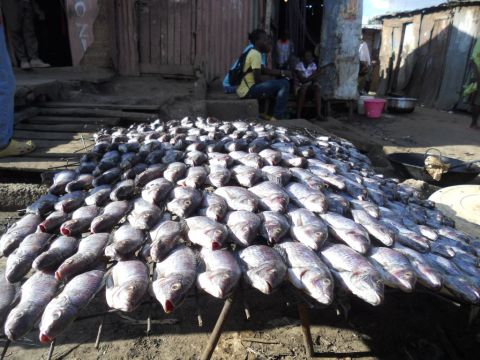
I can’t believe this is how people survived the pandemic. I feel sorry for those kids selling fish in the pic you have posted
LikeLiked by 1 person
I feel remorseful too for the guys. But the government is working on it
LikeLike
Maybe the government should develop the rural areas to curb the overpopulation in the slums.
LikeLike
Life in the slum is never easy,,
😔 Alot of effort needs to be put in place.
LikeLiked by 1 person
Atleast the government is making a step to change the current situation.
LikeLike
Atleast the government is making a step to change the current situation.
LikeLike